Modular Briefcase
Organization and Interior Utility
The Design Concept
The System of Space briefcase serves as a study in translating complex apparel construction into a functional 3D volume. Originating as a school project requiring a standard two-compartment bag, I chose to expand the brief by developing an intricate interior organizational system.
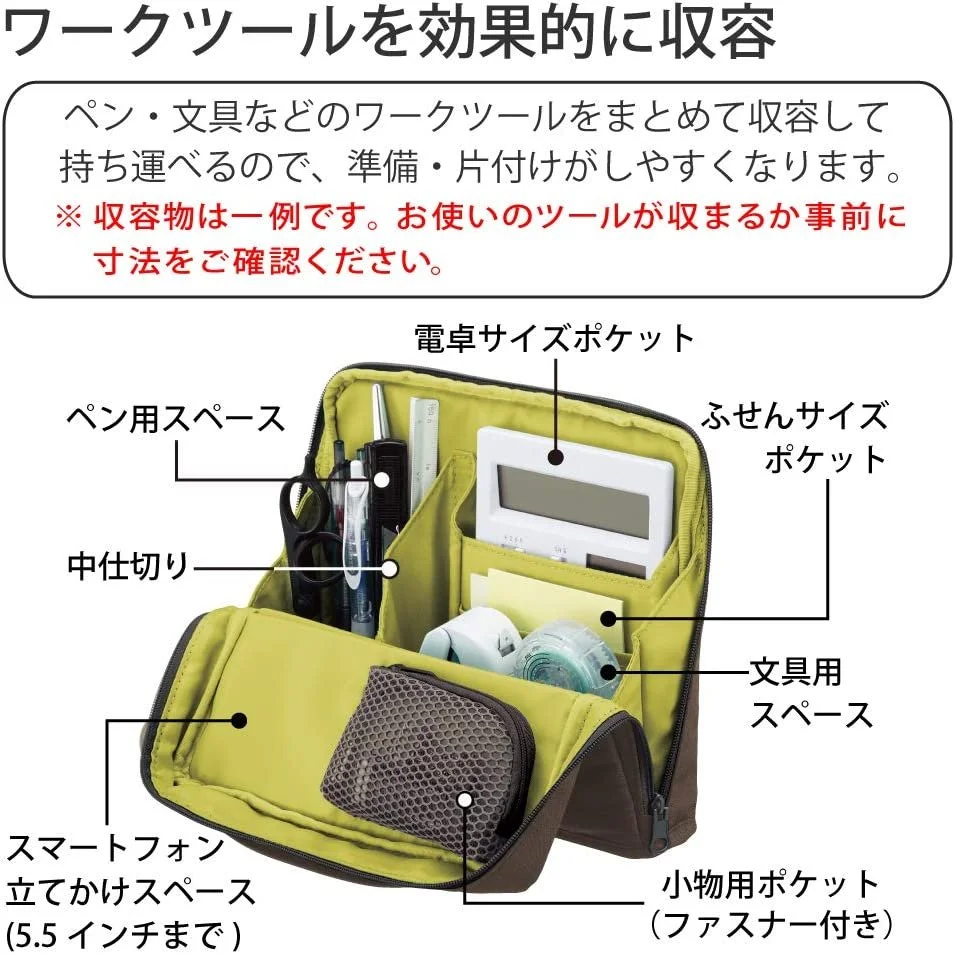
Inspired by the functional ergonomics of Japanese stationery cases, specifically the tiered storage logic of brands like Lihit Lab, the design hides a high-density utility grid behind a minimal waterproof exterior.
Material Logic and Sourcing
Sourced from industrial suppliers, including Wawak and Ohio Travel Bag, the material selection focuses on durability and structural integrity:
The Shell:
10 oz Olive Green Waxed Canvas for weather resistance
The Lining:
Charcoal 2-Ply Nylon Taslan for a high-strength, moisture-resistant interior
Support:
1/8 inch Closed-cell Polyolefin foam and non-fusible interfacing
Hardware:
Industrial-grade #5 nylon coil zippers, Prym snaps, and seatbelt-grade nylon webbing for the carry system
Interior Architecture: The Three-Wall System
The interior utilizes a three-wall layout (A, B, C) to organize the two primary compartments into a series of specialized zones:
Modular Flexibility:
The side walls are engineered with box-stitched Velcro strips, allowing them to be partially detached. This modularity enables the user to reconfigure the internal volume between a structured grid and a larger open void.
Storage Density:
The system features over 15 dedicated storage points, including a foam-padded laptop sleeve, tiered slip pockets, a mesh elastic pocket, and grosgrain hanging tabs for hardware and peripherals.
The Process
The project required a shift from flat-patterning to 3D box construction. I mapped the initial storage schematics in Adobe Illustrator before drafting the patterns in Optitex. I executed the full production cycle independently, following a 40-step industrial Sequence of Construction (SOC). This workflow was critical for calculating turn-of-cloth allowances and ensuring the 3D corners maintained the precision of the initial digital draft.
Technical Specs
Patterns: 45 digitally drafted pieces (Optitex)
Dimensions: 15" W x 10.5" H x 6" D
Assembly: 40-Step Sequence of Construction
Finishing: 3/8" Twill tape-bound internal seams